Imperial Stout & Barleywine
The Art of Dark Beer
Depth, roast, barrel-aged complexity and noble malt richness — a guide to two of the most extraordinary beer styles ever created.
Imperial Stouts and Barleywines are not refreshment beers. They are beers of contemplation — complex, structured, generous expressions that rival the greatest wines and spirits in depth, ageing potential and sheer emotional impact. Here is everything you need to know about these two extraordinary styles.
Imperial Stout — Depth, Roast & Elegance
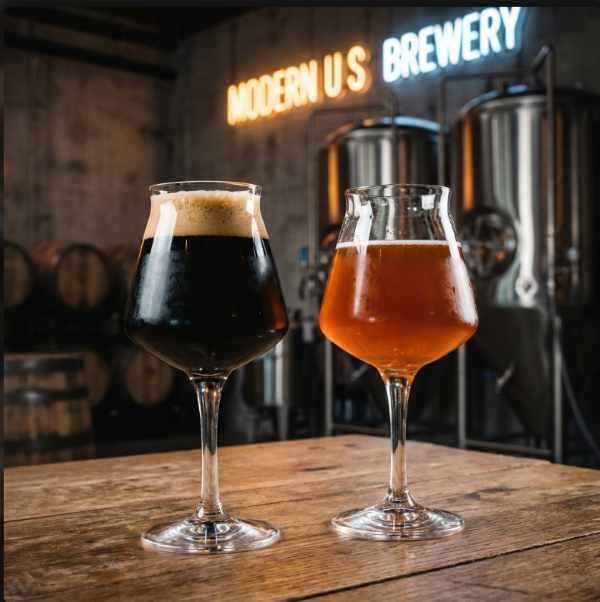
Born in the British Isles, Stouts are immediately recognisable by their near-black colour and dense, creamy head. Their aromatic profile is dominated by coffee, cocoa, dark chocolate, sometimes liquorice and dark confit fruits — flavours born from the use of heavily roasted malts.
The Imperial Stout — Queen of Dark Beer
The Imperial Stout — also known as the Russian Imperial Stout — is a more powerful, higher-alcohol evolution of the traditional style. Originally brewed in England for export to the Russian Imperial Court, it is defined by a high alcohol content (typically 8–15% ABV, sometimes higher), a full and velvety texture, intense aromatic richness and an exceptional capacity to age and develop in the cellar.
Imperial Stout
Near-black colour · Dense creamy head · Coffee, dark chocolate, roasted malt · 8–15% ABV · Velvety texture · Exceptional ageing potential
Serving & Cellaring
Serve at 12–14°C in a tulip or snifter glass · Cellars beautifully for 5–15 years · Opens up significantly with 30 minutes in the glass
Today, America’s finest craft breweries have mastered this style and elevated it to new heights. Revolution Brewing (Chicago) is celebrated for its bourbon barrel-aged Imperial Stouts — powerful, structured and perfectly balanced. Dimensional Brauerei. pushes the boundaries of the style with bold, often pastry-rich creations of remarkable complexity. And of course, the Bourbon County Brand Stout series from Goose Island, BBT from Side Project and KBBS from Toppling Goliath are among the most sought-after expressions in the world.
The Art of Barrel-Ageing
Many of the world’s finest Imperial Stouts are aged in barrels that previously held bourbon, rum or whisky. This process imparts woody, vanilla-laced notes, additional layers of complexity, a remarkable roundness on the palate and an extraordinary finish. Certain vintage batches age for several years, evolving towards more integrated aromas reminiscent of port wine or intense dark cacao.
🛢️ What Barrel-Ageing Adds
The type of barrel profoundly shapes the character of the final beer. Each wood and previous spirit leaves a distinct aromatic imprint.
Barleywine — Power & Malt Nobility
The name Barleywine says it all — barley wine. Originating in England, this style is defined by its high alcohol content (typically 8–14% ABV) and its extraordinary malt richness, which brings it closer in character to a great wine or spirit than to a conventional beer.
Unlike Stouts, Barleywines display an amber to copper colour with ruby highlights. Their aromatic palette evokes caramel, dried fruits (fig, date, raisin), toffee, honey and sometimes noble vinous or oxidative notes that develop with time in the cellar.
Barleywine
Amber to deep copper colour · Caramel, toffee, dried fruit, honey · 8–14% ABV · Rich malt body · Ages magnificently for 5–10+ years
Serving & Cellaring
Serve at 12–16°C in a snifter or wine glass · Cellars exceptionally well · Fresh versions show hop character; aged versions reveal dried fruit complexity
English vs American Barleywine
Two great interpretations exist side by side. The English Barleywine leans towards the malt — rounded, warming and subtly complex, with restrained bitterness and a wine-like elegance. The American Barleywine is more aggressively hopped, with a pronounced bitterness and resinous or citrus notes that balance the intense malt backbone. Side Project’s Anabasis series and the Barleywines of Hill Farmstead perfectly illustrate what this style can achieve in terms of complexity and cellaring potential.
Beers for Contemplation
Imperial Stouts and Barleywines are not everyday drinking beers. They are beers of occasion — perfect for slow, attentive sipping at cellar temperature (12–14°C). Their richness makes them natural companions for powerful flavours:
Dark chocolate desserts
Aged and washed-rind cheeses
Braised meats and game
Duck confit, foie gras
In place of a digestif
Crème brûlée, toffee pudding
Their richness is also deeply appreciated by lovers of great spirits and powerful wines — anyone who enjoys a fine Bourbon, a aged Scotch or a Premier Grand Cru Bordeaux will find much to love in a well-crafted Imperial Stout or Barleywine.
Why Are These Beers Truly Exceptional?
Both styles demand extraordinary technical mastery — longer fermentation times, extended maturation and, in many cases, months or even years of barrel-ageing. The result is always a complex, evolving beer, produced in strictly limited quantities, whose value and character develop over time like a great vintage. Many bottles appreciate in value on the secondary market.
The Breweries We Trust
Conclusion
Imperial Stouts and Barleywines represent the noble, audacious face of craft brewing. Deep, structured and generous, they rival the greatest wines and spirits in complexity, longevity and the sheer pleasure they provide. Whether you are building a serious cellar or simply looking for an extraordinary bottle to open on a special occasion, these styles — carried by breweries like Side Project, Goose Island, Toppling Goliath, Revolution and Dimensional — are absolute essentials.
Explore Our Full Selection
Browse over 500 hand-selected craft beers — including the world’s finest Imperial Stouts and Barleywines — available for worldwide delivery from Switzerland.
Shop US Craft Beers →